
.png)
.png)
.png)
.png)
.png)
.png)
.png)
Theme: 8. Negotiating Margins: Power, Agencies, Representations, Resistances
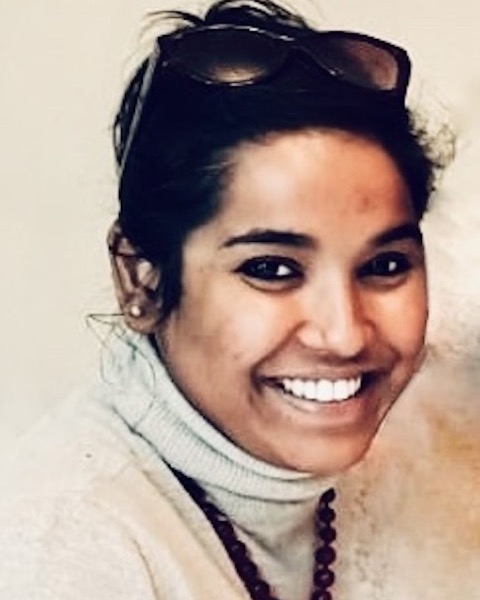
Sanjukta Sunderason
University of Amsterdam, Netherlands
Sanjukta Sunderason
University of Amsterdam, Netherlands
Sanjukta Sunderason
University of Amsterdam, Netherlands
Ksenia Robbe
University of Groningen, Netherlands
Taushif Kara
King's College London, United Kingdom
Ned Bertz
University of Hawaii at Manoa, United States
Ideas and vocabularies of ‘humanity’ and ‘freedom’ from the decolonizing world have for long been overshadowed by dominant Eurocentric conceptualisations. How might we decentre these vocabularies from and across the margins in/of Asia and Africa? In this panel we explore vocabularies of ‘humanity’ and ‘freedom’ in artistic, religious, literary and political thought, praxis and imaginaries shaped through creative and fricative entanglements across sites of decolonization in Asia and Africa.
While the idea of freedom has often been collapsed with the liberal self-perception of the United States, it was shared and sought to be disseminated, in scale, across Cold War and non-aligned geographies, and, in semantics, across resonant vocabularies of independence, emancipation and liberation unique to the 1940s-1980s. While resonant in meaning, these vocabularies carried different accents: while independence often connoted transfers of political power from empire to post-colonial nation-states, emancipation and liberation implied struggles for freedom via activism and war (emancipation from structural oppression like slavery; or liberation from class war/occupation) and were widely used across the Third World. Freedom carried a fluid meaning: it combined, in critically ambivalent ways, questions of individual and cultural/political sovereignty, commitment to aesthetic purity and utopian politics.
Imbricated in the vocabularies of and struggles for freedom was an engagement with universalist conceptions of humanity. Colonial and post/colonial regimes legitimated their power through the creation of hierarchies of humanity founded on Manichean logics. These were challenged and re- articulated through other universalist conceptions ranging from radical humanism to theories of martyrdom. Internationalist solidarities were forged in the struggles to reclaim humanity with overlapping ideologies but also internal contradictions.
Drawing our readings from the perceived ‘margins’ of African and Asian histories, we argue that marginality is more than peripheral or subservient to perceived ‘centre’-s or dominant paradigms. Margins, instead, are active sites for productions of historical agency, of thought, and counter- hegemonic imagination. In this panel we are interested not just in speaking from/on the margins, but
asking: What are the different ways and modalities of thinking around humanity and freedom connecting margins and marginalities? How are these expressed in artistic, religious and political thought?
The five proposed papers reflect - from plural forms (art, thought, literature, charity, everyday lives) and archives across India, Pakistan, Tanzania, and South Africa - to foreground connected ways of thinking on freedom, universalisms, and humanity itself.
Presenter: Sanjukta Sunderason – University of Amsterdam
Presenter: Ksenia Robbe – University of Groningen
Presenter: Taushif Kara – King's College London
Presenter: Ned Bertz – University of Hawaii at Manoa